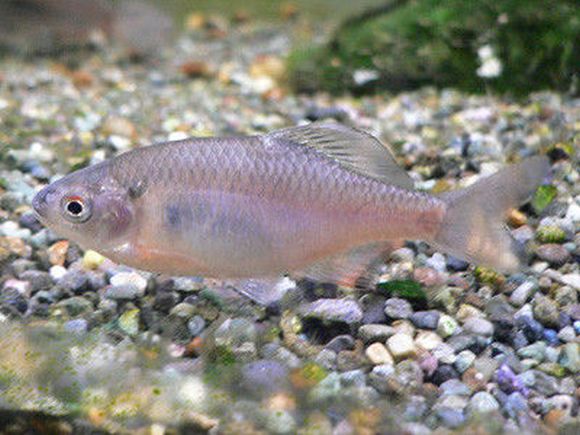
The Kyoto Aquarium is offering a limited summer snack officially dubbed the “ayu salt-cooked hot dog.”
To the uninitiated, this probably sounds like a hot dog topped with some exotic, delicious spice called ayu, but adventurous expats will recognize ayu as a native Japanese fish species often served grilled whole on a stick.
How one prefers their fried eggs cooked is about as divisive an issue as whether Batman or Wolverine would win in a fight. Many a surprise anniversary breakfast in bed has no doubt ended in bitter tears due to fried eggs being prepared in the incorrect way.
But you can avoid this unnecessary situation and show solidarity with fellow runny egg lovers with this new “egg in a basket” iPhone 5 case. Just snap your iPhone inside and share the other half with your runny egg soul mate; then, by clicking the two halves together as a secret greeting, you can baffle and enrage all those cretinous fully cooked yolk lovers at the diner.


Who among us hasn’t dreamed of being a lolita? We mean the fashion conscience kind of Lolita, not the…other kind. The frilly little dresses, the bonnets, the ridiculous platform shoes, and all the cake and tea you can get in your stomach! Sounds great, right? Except for the price tag—buying all of those frilly little dresses yourself will set you back a lot of money! Well, here’s your chance to try out being a lolita for a day without breaking the bank or selling a few organs!
This year’s finalists for the Kanto region Miss Cutest High School Girl contest were decided on August 3. Never heard of the contest before?
Miss-Con, the Japanese nickname for the contest, was started in order to figure out who was the cutest high school first year in the Kanto region. Because if there’s one thing Japan can agree on, it’s that there’s nothing cuter than a high school girl. In the past, the contest was a part of a different event “Love Sunshine” or LoveSun, meant for followers of the gyaru fashion, a form of extreme fashion in Japan, often involving heavily dyed hair, tanned skin, lots of make up, and daring clothing choices. Now in its third year, Miss-Con has two separate categories for their contestants: cutest gyaru and cutest “natural” high school girl (i.e. without the crazy hair and signature outfits).
Strokes are serious medical disturbances that we all have to live in fear of, often striking out of the blue and claiming lives or altering them drastically. For manga artist Mahiro Takura, it cost the use of his right hand, perhaps the most valuable body part for someone in his field. For many, that would be enough to send them into a spiral of depression.
However, rather than let his condition control his life, Mr. Takura decided to take control and has been rapidly learning to make use of his left hand instead. He recently tweeted the story of his recovery and we would like to share the translated version with you.
Believe it or not, a Lego Jar Jar Binks has existed for years, but the iconic DeLorean time machine from Back to the Future has only just now been immortalized in block form.
Starting out in 1949 as a seemingly simple toy set consisting of multicolored blocks that fastened together, Lego has grown into a vast toy and ever more complicated empire spanning hundreds, even thousands, of play sets depicting iconic characters and scenes from geek culture.
From 5 August, fears of another major earthquake in Japan began to spread on Twitter. The source of the unease was a screenshot from a Japanese talk show, which laid out the following series of earthquakes leading up to the Tohoku earthquake in 2011, alongside a similar series of earthquakes which have struck in recent days.
Some games make us so mad that we fling our controllers across the room in rage, forgetting for a split second that it’s rarely, if ever, the hardware’s fault that we lost.
But sometimes we get so angry with a game, at being pwned online, at losing for the nth time to that end-of-level boss, that we decide to hang up our controllers for good. Which is exactly what a number of gamers in Japan seem to have done if a collection of photos doing the rounds on Twitter today is anything to go by.
Producers of the upcoming reboot of classic anime franchiseSailor Moon have been frustratingly tight-lipped with fans. Originally set to premier this summer, its premiere has now been pushed back to winter, and to date, not a single piece of art from the new series has been released.
Merchandising giant Bandai, on the other hand, has been putting out a steady string of new goodies for Sailor Moon fans as part of the series’ 20th anniversary. NewSailor Moon-themed accessories were released in June and July, and the company has now made it three months in a row with two new necklaces plus a new pair of earrings that went on sale this month.
A decade after the OpenSky project began, Kazuhiko Hachiya and his team of engineers and artists can finally give themselves a well deserved pat on the back. Their dream of creating a working version of the glider seen in Hayao Miyazaki’s Nausicaä of the Valley of the Wind (named Möwe) has come to fruition.
On 31 July, Hachiya uploaded the video titled “OpenSky3.0 trailer,” which shows the jet engine equipped M-02J taxi and take to the sky by its own power.
At 12:30 p.m. on Sunday, August 4, Northeastern Japan started to shake. On the Japanese shindo scale, the quake measured between 3 and 4 (overhead lights sway and objects rattle, but some people who are on the move may not notice it) in most areas, a ‘low-5’ at its strongest. Thankfully, there are thought to have been no casualties as the tremor was relatively short-lived, and with the quake of March 2011 and weeks of resulting aftershocks having been far stronger, the people of Tohoku are now fairly hardened when it comes to smaller rumbles.
Curiously though, no sooner had the earthquake passed than a few jokesters began sharing the above image from the Japan Meteorological Agency, along with messages of “LOL” and ‘Why do I suddenly feel like I want to go to Northeastern Japan?”
I’m sure I’m not alone in loving my smartphone but always wishing the battery would last a little longer. For many of us, not knowing whether our mobile phone’s battery will make it through the day can be a real problem. While mobile technology has improved in leaps and bounds in recent years, improvements in the batteries that power them have been rather more sluggish.
Thankfully, all this could be about to change. Japan’s Shin-Etsu Chemical Co. Ltd recently announced that it has developed a new material for use in lithium-ion batteries that boasts capacities roughly 10 times the current standard, and is about to shake up the entire industry.
A photo surfaced on the internet recently which shows us a typical day at the office for a couple of ladies a long time ago in Japan. They look almost bored as they unload 300 kg (661 lbs) of rice each on their backs.
After being completely suspended in 2012, it seems like plans for the Akira live action movie are finally moving forward again. The Warner Brothers movie will be a Hollywood retelling of the 1988 cult anime classic, with original writer and director Katsuhiro Ohtomo acting as executive producer. This will perhaps assuage some fans’ fears that Hollywood will turn the dark, complex narrative into just another generic guns-and-explosions blockbuster.
For foreigners living in Japan, looking through DVDs can be a chore. You generally have a 50 percent chance of the title being the same, leaving you scanning through the cover designs to find what you’re looking for the other half of the time.
Sometimes the new titles that are bestowed in Japan give more insight to the film. For example, Jerry Maguire is given the less romantic but more concise title of The Agent. However, translation and localization often leaves people making judgment calls that could easily backfire. Take the DVD version of Napoleon Dynamite which Japanese cinema lovers have deemed “Japan’s worst changed movie title.”
When setting up shop around famous landmarks, it never hurts to blend in. Especially in Japan, where tourism accounts for roughly five percent of the GDP. You wouldn’t want to destroy the tourist attraction by ruining the ambiance, right?
On the other hand, there’s not really very much that’s “traditional” about Family Mart convenience stores, so we had to wonder what kind of disguise would get slapped on their store near Ise Grand Shrine…
We’re pretty sure the last time someone went out of their way to eat hard candies when perfectly good ice cream and chocolate bars were available nearby was the 1930s or those tin candy scenes from that heartbreaking anime, Grave of the Fireflies.
But in Japan, candy comes in so many crazy flavors, colors and varieties, you’d be remiss not to at least try the convenience store greatest hits. Unfortunately, doing so would probably give you adult onset diabetes, so we’ve gone ahead and tried all the candy on offer because we’re already gross and diseased anyway. Here are our top 10 picks for the greatest hard candies on offer at Japanese convenience stores.
Kawakami Village in Nagano Prefecture is considered Japan’s premier lettuce producing village. Located near Tokyo and with just the right conditions for farming, residents have been able to pull in a good chunk of cash from their own brand of lettuce, earning it the nickname “Miracle Village”.
Bumper crops such as their Chinese cabbage are booming so well that the village’s 4,759 people boast and average annual income of over 25,000,000 yen (US$252k). However, all work and no play makes Jyoji a dull boy, so the mayor of Kawakami is sending the call to all Japan that some eligible bachelors may soon be hitting a ski-slope near you!
After the explosion at Fukushima Daiichi Nuclear Power Plant back in 2011, the subject of nuclear power has become a very delicate and complicated issue for the Japanese. While there is an element of danger associated with the creation of nuclear energy, many towns have also benefited from the large sums of compensation, known as “nuclear money”, that have gone into creating jobs and strengthening the prosperity of areas that have agreed to home such power plants.
Despite pressure from surrounding groups and the mainland, a small island off the coast of Yamaguchi Prefecture has for years refused to have anything to do with nuclear money, and has firmly opposed plans to build nuclear power stations in the area. But all that may be about to change.