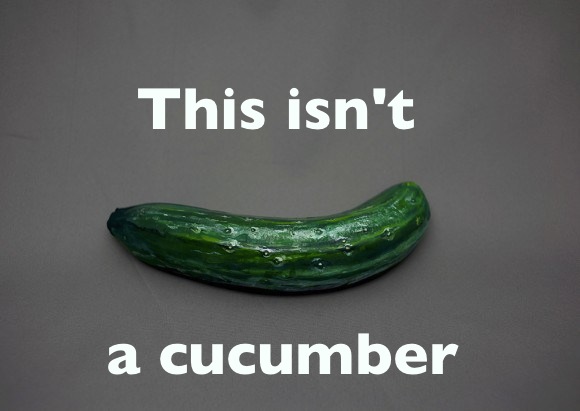
Getting tricked is usually no fun, but not in the case of brilliant art that tricks the eye. Take for instance, the work of Japanese art university student Hikaru Cho, an example of which is shown in the picture above. Does that look like an ordinary cucumber to you? We certainly wouldn’t blame you if you said it does, but read further to find out what the object really is!
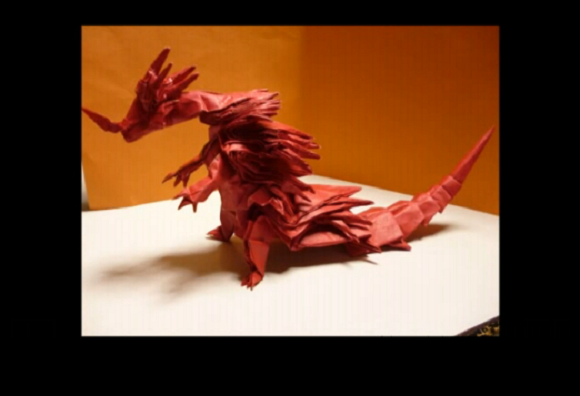
Although it’s had only limited success internationally, in its home country of Japan, the video game series Monster Hunter is a massive hit. New titles have been released for the series at a pace of more than one a year, and the franchise can count 17 titles since it began in 2004.
Monster Hunter is popular enough that you could argue that it’s become one of Japan’s national pastimes, so maybe it was only a matter of time before someone thought to combine it with another of the country’s favorite cultural activities, the paper-folding art of origami.
For the most part, Japan isn’t really sold on the idea that bigger is better. Sure, you can find giant parfaits and monstrous sashimi bowls, but that’s to be expected, since saying you’d rather have less of either is a sure-fire way to blow your cover to the human resistance that you’re secretly one of their killbot overlords in disguise.
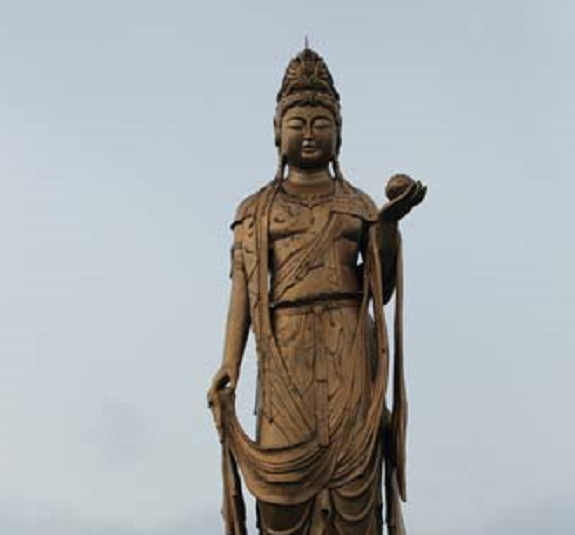
Artistically speaking, though, the generally preferred aesthetic is graceful understatement, which doesn’t really necessitate ostentatious scale. The one major exception to this, however, is images of Kannon, the Buddhist goddess of mercy and compassion.
Giant-sized statues of Kannon can be found at a number of locations in Japan, and now, if you’re lucky enough, you could own one for less than 1,000 yen.
As someone who learned to drive a car before he could ride a bike, there are a couple of things that slipped through the cracks on my path of acquiring basic life skills. Sewing, for example, is still an arcane art to me. After all, why go to the hassle of making my own clothes, when there are plenty of stores perfectly willing to take my money in exchange for a new shirt or pair of jeans?
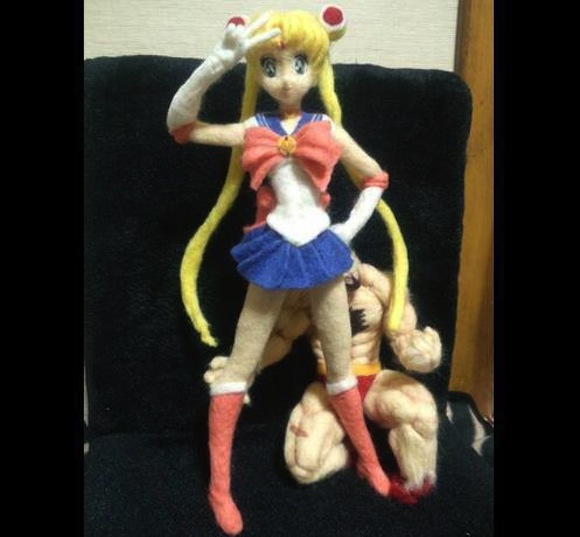
But maybe I’m missing the point. After all, knowing how to sew doesn’t just mean you can design your own wardrobe, it also means you can create awesome anime and video game figures made entirely of felt.
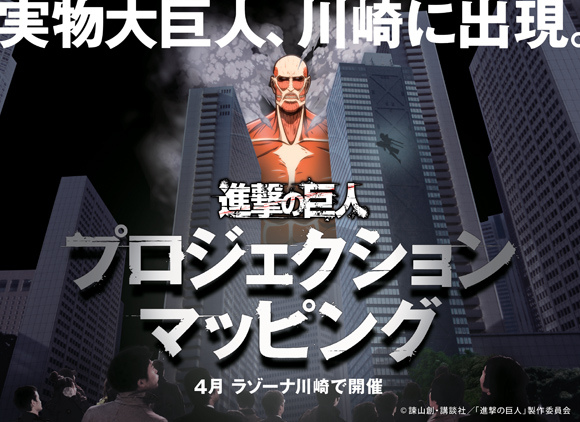
For such an ordinarily listless bunch, hit animeAttack on Titan’s titular monsters sure have been busy lately, collaborating with hamburger chain Lotteria, appearing in their first smartphone game, and even helping one fan get a job.
But now comes literally the biggest Attack on Titan promotion yet, as a life-size recreation of the 60-meter Colossal Titan is set to menace Japan in projection-mapped form at a shopping center in Kawasaki.
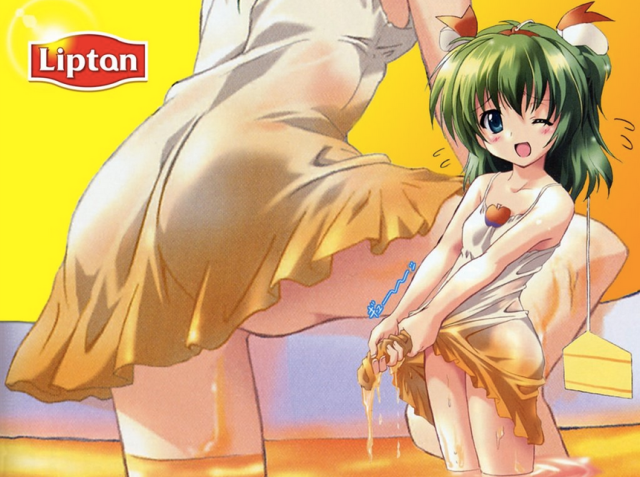
Anthropomorphized characters are both incredibly popular and prevalent in Japan, as you’re probably already very aware. From battleships to Japanese companies and municipalities, there’s seemingly nothing that can’t be made human–and probably cute as well! And, perhaps as a challenge to what we assume must be Rule 38 of the Internet–anything can be anthropomorphized and if it hasn’t been anthropomorphized yet, someone will do it–one Japanese Internet user took to 2Chan to request, simply enough, “Images of anthropomorphization, please.”
And the Internet gave him exactly what he wanted, with everything from Lipton Ice tea and Doraemon in sexy/creepy human form to an anthropomorphized version of Monday itself. Click below to see what was on display! (Note: Not all of these images are entirely safe for work.)
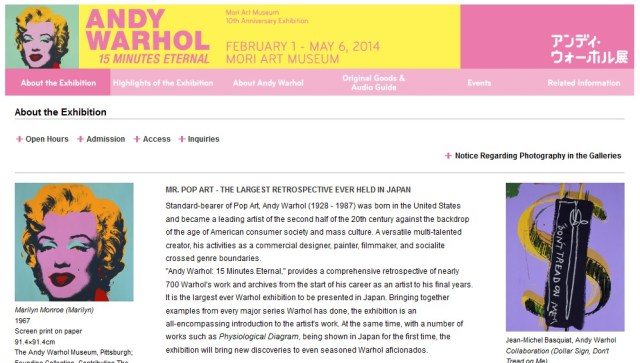
Even before his first visit in 1956, Andy Warhol had been largely well-received by people in Japan. Pieces like “Campbell’s Soup I” are just as easily recognized here as anywhere along with other pieces of the artist’s highly prolific and vast range of work. But with this massive collection stored far away in The Andy Warhol Museum in America it’s been hard for his Japanese fans to experience it all until now.
The museum is taking its collection on a tour of Asia including a three-month stay at the Mori Art Museum in Roppongi Hills, Tokyo. The exhibit titled Andy Warhol: 15 Minutes Eternal boasts nearly 700 pieces of art and film as well as some other exhibits designed to take visitors deep into his world as it existed decades ago.
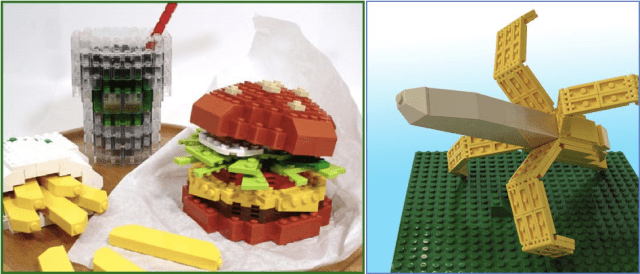
With the right amount of creativity, Lego bricks are the keys to other realms and the building blocks of otherworldly creations. But put in the hands of a spatially challenged, uninspired Lego novice, those little bricks continue to resemble the little pieces of plastic they really are. That’s why it’s so impressive when someone masters the art of building with Lego. Artist, Sachiko Akinaga, is one of those Lego masters and she’s managed to create plastic food that will make you want to take a bite.
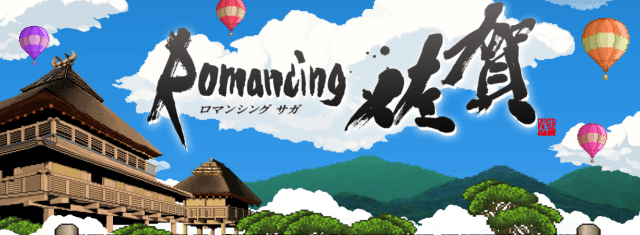
Final Fantasy and Dragon Quest may be video game developer Square Enix’s two biggest series, but the Saga franchise could make a solid case for the company’s third-most important intellectual property. While the initial title in the series was the Game Boy’s Makai Toshi Saga, or Devil World Tower Saga, the more eloquently named Super NES follow-up, Romancing Saga, is where the series really took off, and 10 games are now counted as part of the Saga saga.
2014 marks the 25th anniversary of the Saga franchise, and in celebration Square Enix is collaborating with a partner that’s at once completely unexpected and totally obvious: Saga Prefecture.
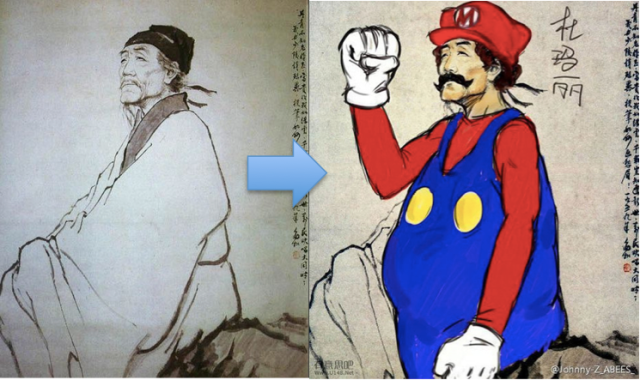
Nothing says fun like defacing one of your country’s beloved historical figures. Queen Elizabeth with a lightning bolt across her face à la glam rock band Kiss, George Washington with a Hilter mustache, and whatever it is that’s going on up in here are just a few examples of the lengths people will go to have a little fun with history.
Even Du Fu, often called the greatest Chinese poet of all time, isn’t immune to the idle hands of creative doodlers. Let’s take a look at 18 different Du Fu makeovers by Chinese artists.
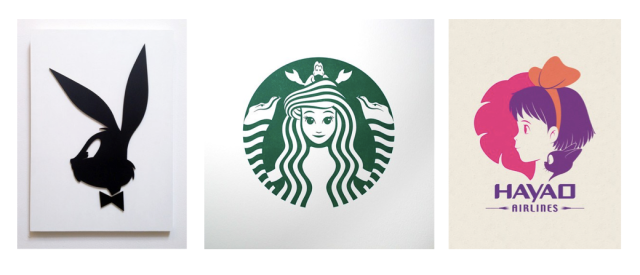
Today the marketing industry is a multi-billion dollar entity that spends countless man-hours designing and maintaining relatable brand logos. That’s why the work of pop-culture artist, Bruce Yan, is so cool. He takes characters we all know and love and uses them to recreate logos we see every day, somehow managing to give rise to a brand new and yet completely familiar logo. From the Girl Scout symbol to Morton Salt, take a look at his clever redesigns after the jump!
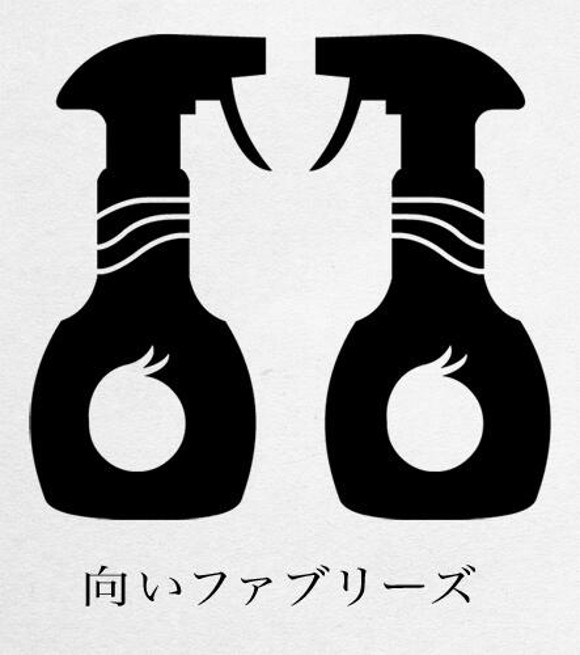
There’s a lot of art enmeshed in everyday Japanese life. From the pictographs of the kanji writing system to the aesthetics of traditional practices, it’s easy to take for granted the visual symbolism on which a lot of the culture is based. One of the most striking examples of Japanese design is the kamon, or family crest, used for centuries to signify a family name or clan and often seen on the sleeves of formal kimonos and ceramic roof tiles of traditional homes. It’s estimated that there are as many as 30,000 family crests in Japan, and while many Japanese would struggle to identify a large number of them, some crests, such as the chrysanthemum Imperial crest and the Tokugawa shogunate hollyhock design, are easy to identify.
Artists are now using the digital medium to create a number of new kamon to the delight of netizens nationwide. What makes these unique is the fact that the images inside the crest are not flowers or scenes of nature but more modern logos and tools familiar to us through advertising and the digital age. The crest above, for example, might look like a cross design made up of four stylised rectangles, but if you look closely you’ll see something more commonly used in digital cameras: SD memory cards. Featuring everything from Twitter logos to Febreeze bottles, these unique crests are perfect for the tribes of today.
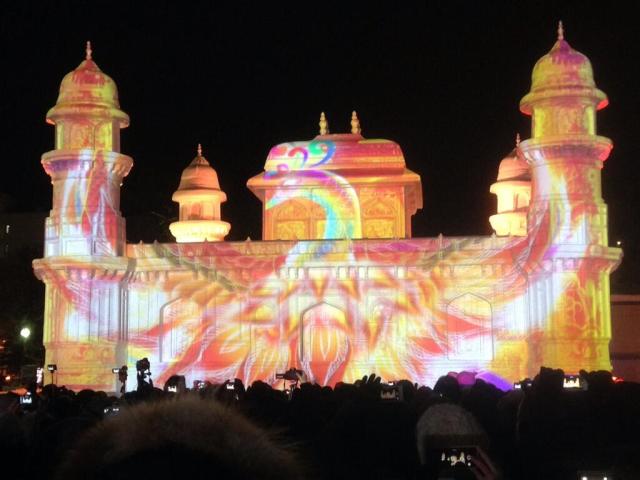
Last year we brought you a firsthand account of the 2013 Sapporo Snow Festival, with more images of snow and ice sculptures than you can get your tongue stuck to. This year, we’re sad to say we couldn’t make it out to the annual event up in Japan’s northernmost prefecture, so we’ve been living vicariously through Twitter users. Some of the images we’ve seen are too good not to share, so we decided to give you a little taste of the snow festival through the following gallery of images from Twitter.
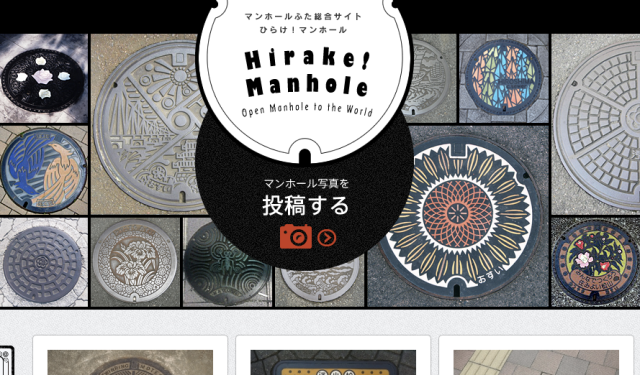
In most countries, you’d never give a manhole cover a second glance. But in Japan, the designs on those metal disks encircled by cement are surprisingly ornate. Most are so beautiful, you’ll have to be careful not to spend the entire day looking at the ground. Now people all over the world can enjoy Japan’s stompable artwork thanks to Hirake! Manhole, a brand new website showcasing manhole cover art across Japan.
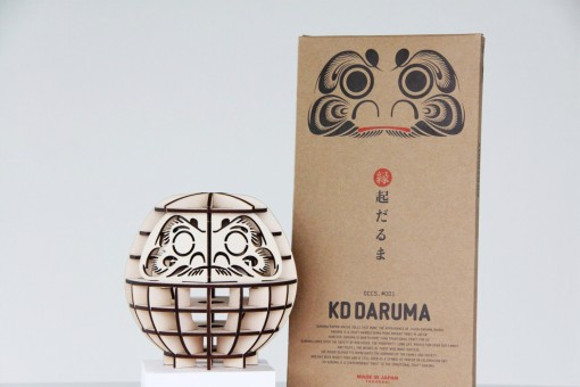
If you’re looking for a unique Japanese gift that’s light in your luggage but heavy in tradition, then this is the item for you. It’s called the KD Daruma (Knock-Down Daruma) and it’s modelled on the centuries-old, round, good-luck talisman which symbolises Bodhidharma, the founder of the Zen sect of Buddhism. This modern take on the daruma features a flat-pack design and clever assembly so unusual it’s just been awarded first prize as Japan’s most fascinating souvenir in a competition held by the Japan Tourism Agency. We take a closer look at the details to see what makes this little novelty so charming.
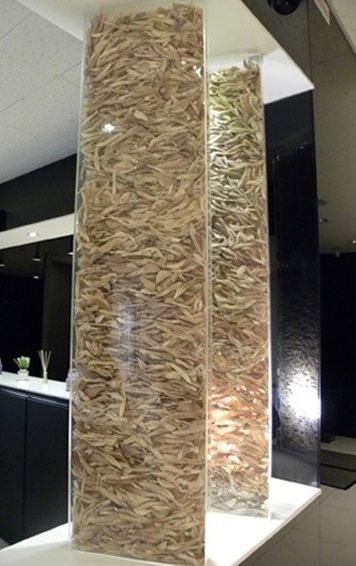
You like sausage, right? Of course you do. But no one ever wants to see how the sausage is made. So why did this plastic surgery clinic in Seoul think it was a good idea to display two towering columns filled with the jaw bones of their past patients? It’s enough to make you rethink your pursuit of the perfect chin.
At Dogo Onsen in Matsuyama City, Ehime Prefecture, 2014 marks the 120th anniversary of the spa’s main building which stands as a notable landmark of the area. It’s a majestic and traditional building that some say was the inspiration for the bathhouse in Spirited Away.
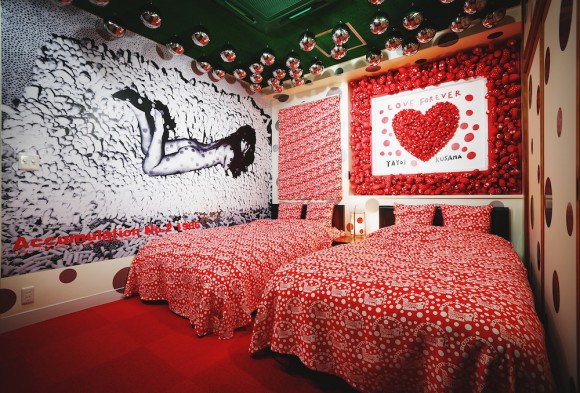
To celebrate, the surrounding area will be hosting a large scale art exhibition in which the Onsen’s main building and at least ten other hotels and inns will be transformed into works by various modern artists. The actual event will run from 10 April to 31 December of this year, but a sneak peak was held from December of last year involving five prominent Japanese artists: Fujio Ishimoto, Yayoi Kusama, Shuntaro Tanikawa, Akira Minagawa, and Araki Nobuyoshi.
Japanese culture is filled with gift giving, and no gift is more common than the omiyage. Usually translated as “souvenir,” omiyage is a bit broader in usage, encompassing all sorts of travel gift situations. Taking a trip somewhere? Make sure to bring back omiyage for your coworkers. Have friends coming from overseas? You might want to give them some omiyage to remember their trip by. And of course, if those same friends offer to show you around their country, it’s only polite to bring them an omiyage as a show of thanks, if you take them up on their offer.
But what kind of Japanese omiyage from Japan is most likely to be a hit with foreigners? Japanese Internet users offered the following suggestions.
Having learned the hard way that some TV series exist simply to keep viewers hanging for years (yes, Lost, I am looking at you), I have to admit that I gave the TV adaptation of Game of Thrones a wide berth for quite some time after it first aired. A few months and the contraction of a very nasty cold later, I found myself in bed with a heap of medication, a DVD box-set and little else to do. By the time I was back on my feet, I was a huge fan of the series (and may have run “Game of Thrones blonde girl” through Google a couple of times) and swallowed, along with the last of the medicine, my usual stubborn pride by telling friends that I was ready to join in their nerdy conversations and even read the books that they had all finished with years ago.
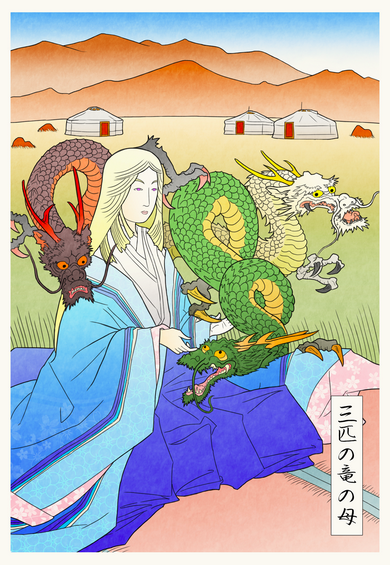
Little did I know, though, that the TV show could be made all the more awesome byrecreating some of its more memorable scenes in the style of Japanese ukiyo-e woodblock prints, with all of my favourite characters looking like they reside in feudal Japan rather than Westeros.
Hayao Miyazaki has created some of anime’s more memorable characters, winning legions of fans all around the world. As such you would imagine that along with the thousands of pieces of fan art, an aspiring sculptor somewhere would pick up the gauntlet and recreate some of them in three dimensions.
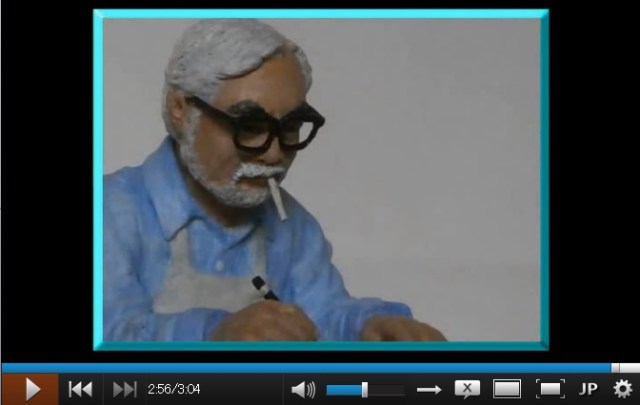
One sculptor answered that call, and set out to make the ultimate Ghibli character from clay: Mr. Miyazaki himself… We hear his friends say he’s “a real character.”
 Japanese trains in Sapporo might be better than those in Tokyo, thanks to one special feature
 Japan’s best conveyor belt sushi restaurant of seven years ago has now, finally, come to Tokyo
 Downtown Tokyo’s meaty monster Kaibutsu ramen will challenge your stomach, thrill your taste buds
 Lawson convenience store at popular tourist site is one of the most unusual in Japan
 Family Mart unveils new Japanese bread that elevates convenience store food to mocchiri levels
 Starbucks Japan releases FIVE new Frappuccinos in a day, and we try them all in 90 minutes
 We tried super spicy wasabi ramen and yakisoba that’s rumored to make anyone cry【Taste Test】
 Hello Kitty and AKB48 collaborate for the ultimate fan merchandise from Thank You Mart
 Pokémon Center superstores won’t sell new Pokémon cards in-store, but will it stop scalpers?
 Foreign man arrested for walking on Shinkansen tracks, claims he was on the run from yakuza
 Japan reportedly adding Japanese language skill requirement to most common foreigner work visa
 Mt. Fuji decorated with a 500,000-flower pink carpet is Japan’s ultimate spring view
 Pokémon and Ikea Japan cross over into each other’s worlds with collaboration events
 Starbucks Japan closing only Shinkansen platform branch for popularity-triggered renovations
 You can assemble a well-balanced team of Pokémon, them eat them, thanks to Japanese cake chain
 30 Pikachus want to share a Tokyo hotel room with you that has separate Grass, Water, Fire spaces
 Man bites woman at cherry blossom park in Japan, dies shortly after
 7-Eleven Japan’s new baked-in-store sweet treat is only available in three parts of the country
 Peanuts and Coke becomes a viral hit in Japan, but is it a trend worth joining?
 Japan now has a special desk for people who work at home with a pet cat[Photos]
 Famous Tokyo cherry blossom spot installs view-blocking screens to fight overcrowding[Video]
 Uniqlo announces new T-shirts for One Piece, Naruto and more for manga publisher’s 100th birthday
 Train station platform ramen store closes its doors on half a century of history in Tokyo
 Starbucks Japan releases new My Fruit³ Frappuccino at only 34 stores around the country
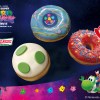 Krispy Kreme releases Super Mario doughnuts in Japan for a limited time
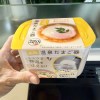 Japanese onsen egg maker from 100-yen store Daiso needs to be on your shopping list
 Survey asks foreign tourists what bothered them in Japan, more than half gave same answer
 Japan’s human washing machines will go on sale to general public, demos to be held in Tokyo
 Starbucks Japan releases new drinkware and goods for Valentine’s Day
 We deeply regret going into this tunnel on our walk in the mountains of Japan
 Starbucks Japan releases new sakura goods and drinkware for cherry blossom season 2026
 Studio Ghibli releases Kodama forest spirits from Princess Mononoke to light up your home
 Japan’s newest Shinkansen has no seats…or passengers [Video]
 Major Japanese hotel chain says reservations via overseas booking sites may not be valid
 Put sesame oil in your coffee? Japanese maker says it’s the best way to start your day【Taste test】
 No more using real katana for tourism activities, Japan’s National Police Agency says
 Starbucks Japan releases FIVE new Frappuccinos in a day, and we try them all in 90 minutes
 We tried super spicy wasabi ramen and yakisoba that’s rumored to make anyone cry【Taste Test】
 Hello Kitty and AKB48 collaborate for the ultimate fan merchandise from Thank You Mart
 Pokémon Center superstores won’t sell new Pokémon cards in-store, but will it stop scalpers?
 Foreign man arrested for walking on Shinkansen tracks, claims he was on the run from yakuza
 Hayao Miyazaki gifts autographed Ghibli anime cel to president of France[Photo]
 Japanese politician arrested on charges of accepting bribes to reduce number of monkeys in park
 Japan’s ultimate wagyu beef bento costs almost US$3,000, promises to be an unforgettable meal
 We tested out an anti-UV umbrella to see how much it cools us down in this dreadful summer heat
 McDonald’s and Gundam team up for customized anime mecha and fried chicken sandwiches[Video]
 Make your mark: Personalize gift bags, notebooks and more with free Muji stamp station
 Cafe next to Tokyo Station offers all-you-can-eat tarts, and Mr. Sato is ready for his desserts