Born and raised in Los Angeles, Casey Baseel spent his formative years staring in frustration at un-subtitled Japanese TV programming shown on Southern California’s international channel. Taking matters into his own hands, he moved to Tokyo to study the language, then found work in Yokohama a decade ago teaching, translating, and marketing hotels he can’t afford to stay in.
When not participating in the eternal cycle of exercising to burn the calories form his love of Japanese food, Casey scours used comic and game shops for forgotten classics, drags his wife around the country in a quest to visit all its castles, sings karaoke not nearly as well as he thinks he does, and counts the days until the summertime bars open on Enoshima Beach.
Some people say if something tastes good, it has to be bad for you. We understand that they’re usually talking about sugary, salty, or fatty foods, and nutritionally speaking, they’ve kind of got a point.
But while we definitely wouldn’t classify any of them as low-calorie, diet-friendly snacks, we still can’t bring ourselves to use the word “bad” in describing these adorable cat cakes and lattes.
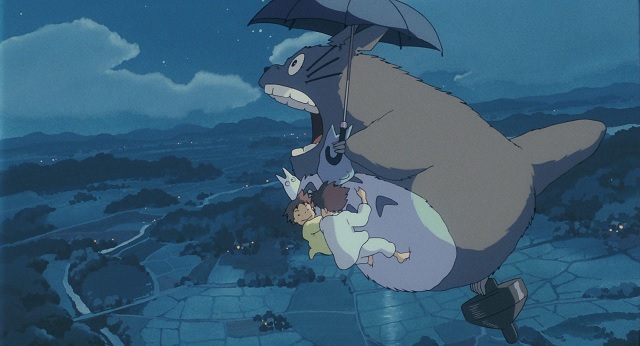
It’s been over a year since the Japanese release of anime legend Hayao Miyazaki’s last film, The Wind Rises. A highly personal film which serves as a powerful closing statement to his storied career, many had hoped it would win Miyazaki his second Oscar, only for the nod in the Best Animated Feature category go to Disney’s juggernaut (and endorser of traditional Japanese cuisine) Frozen.
That doesn’t mean the Academy of Motion Picture Arts and Sciences has no love for Miyazaki, though, as it’ll soon be bestowing an honorary lifetime achievement award upon him.
When I was a kid, we never had Oreos in my house. This wasn’t because my parents had a no-sweets policy, but because the pantry was well-stocked with similar Hydrox sandwich cookies instead.
But while Hydroxes actually predate Oreos by a whole four years, it’s the latter that went on to international fame and fortune. It’s a pretty similar tale to that of Dairy Queen’s Blizzard, which has been largely overshadowed by McDonald’s McFlurry, a nearly identical dessert of ice cream mixed with cookies or candy that came out more than a decade after Dairy Queen’s original.
So while the double imitation of an Oreo McFlurry might seem completely derivative, starting next month in Japan there’s a tasty bit of innovation you can look forward to, as McDonald’s Japan is bringing back matcha Oreo McFlurries.
At my first job in Japan, there was no janitorial staff, so we all had to pitch in with cleaning the office. One day, I punched in, grabbed the vacuum, and started doing the floors. Everything was going fine until I got to the back room, where I opened the door to find my coworker lying flat on her back, fast asleep on the floor.


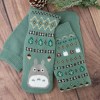
I’m not sure if she’d shown up incredibly early and tired herself out, or just never made it home the night before, but it turns out sleeping at the office in Japan isn’t quite as unusual as you’d think (or hope). Thankfully, if you do get stuck, at least you can be still be warm and cozy, thanks to this crazy wearable futon.
He may have created one of anime’s most successful franchises, but Yoshiyuki Tomino, father of Gundam, hasn’t let his years of success mellow him out any. If anything, just the opposite seems to be happening, as he’s recently dished out harsh condemnations of both mega-hit Attack on Titan and listless Japanese youths.
As the debut of his newest series, Gundam Reconguista in G, draws near, Tomino seems to be staying the acerbic course, with a wide-ranging complaint about the current state of anime voice acting, plus some regrets about his prior collaboration with famed sci-fi designer Sid Mead.
With the highest concentration of anime and video game specialty stores on the planet, it’s pretty easy to go over-budget spending a day in Akihabara. But while some otaku might claim that Japanese animation is their lifeblood, eventually everyone needs to eat something.
So for everyone with a crying wallet and a grumbling stomach, a new restaurant has just arrived in the neighborhood, serving pasta to-go, starting at just 190 yen (US$1.88).
Revered as “The God of Manga,” the late Osamu Tezuka is simultaneously Japan’s most revered and prolific comic artist. More than 700 manga series sprang from the mind of the tireless Tezuka, but even with that busy schedule, he still found time to draw his version of Japan’s most famous cat, Hello Kitty, combining her with one of his most-used characters.
Being the biggest anime retailer in Japan means having to please all of the many different subgroups that Japanese animation aficionados fall into. So while one day mega-store Animate might cater to old-school fans by letting them slap 90s basketball saga Slam Dunk’s coach in the neck, they also have to do something for fans of more modern series too.
Stepping up to the challenge is Animate’s Yokohama branch, where lovers of high school swimming story Free! can now photograph themselves handcuffed to shark-toothed pretty-boy Rin.
The 1997 anime movie The End of Evangelion was in many ways an unprecedented exercise in creative freedom for animation studio Gainax. The franchise-starting TV series had wrapped up a year earlier, with Gainax’s coffers drained and a highly metaphorical, sparsely animated finale. End of Eva would be a reimagining of the ground-breaking anime’s final act, and its theatrical release format meant a bigger budget and no more pesky broadcast content restrictions.
As a result, the film is graphic and jarring in its raw depictions of both violent urges and sexual desire. But while none of that was a problem in theatres, it was a different story when End of Eva was recently shown on TV in Japan, which necessitated some fan-angering cuts, including the movie’s most infamously shocking scene.
Heads-up, gainfully employed readers! While you won’t see any offensive pictures below, the subject matter might not be the sort of thing you’ll want your coworkers to see you reading at work.
In some ways, the huge amount of vending machines in Japan seems like a win-win situation. In a country that gets incredibly hot and sticky in the summer, it’s nice to never be more than a few minutes’ walk from a cold drink, and for beverage companies like Coca-Cola, the machines are a huge source of income.
That said, all of those vending machines are essentially coin-operated refrigerators, collectively sucking up a huge amount of electricity. In an effort to cut down on their energy consumption, Coca-Cola has developed a new type of unit that spends as much as 16 hours a day not using any electricity at all to keep its products nice and cool.
With beautiful natural scenery, delicious food, and an unhurried atmosphere, Japan’s northern island of Hokkaido is one of the country’s most popular vacation spots. There’s one big drawback, though, which is that airfare to and from Hokkaido can eat up a big part of your travel budget, leaving you less cash to spend on a hotel with nice amenities or local delicacies like fresh salmon roe and scallops.
Recently, though, we found a hotel in Hokkaido that offers it all, with soft beds, all-you-can-eat seafood, an all-night hot spring, and even a price that makes it a very affordable luxury.
For serious cat lovers, it’s hard to be apart from their beloved animals for even a moment, but there are some places, like offices or restaurants, where you just can’t take your pet with you. If you’re looking for a way to always feel connected to your kitty, we suppose you could make a sweater out of its fallen hair, but before you grab those knitting needles, there’s an alternative that’s a little less labor-intensive (not to mention a bit less crazy).
All you need to do is snap a photo of your cat, and have it made into a pair of custom-crafted earrings from this Japanese online store.
For hardcore video gamers, life is a never-ending series of battles as they try to overcome the next boss, unlock achievements, or climb up the online leader boards. And for some of their parents, life is a never-ending series of battles as they try to get their kids to stop doing all that and study.
While more honorable gamers limit themselves to utilizing the best in-game equipment, some give in to the temptation to use hacks to gain an advantage over their adversaries. Recently, one education-minded mother in China adopted the same tactic by hacking her son’s online gaming accounts, then deleting them.
If it’s been a while since you’ve cleaned out your cabinets and closets, you can be surprised at what you find inside them. Sometimes, you’ll uncover good things, like the time I was straightening up and came across an envelope with 5,000 yen (US$49.50) which I’d earmarked for some purpose, then forgotten about. Other times, the surprises aren’t so pleasant, like the time in my old, first-floor apartment where I lifted up a box and found a scurrying cockroach underneath.
As disgusting as the creepy critter was, though, in pure shock value it pales in comparison to what a woman in Japan found in her home: an artillery shell.
In the past, we’ve seen multiplecars decked out with special paint jobs and accessories honoring Mobile Suit Gundam. But what if you want to show your love for anime’s longest-running mecha series, in a slightly more elegant kind of way? Is there any way for you to drop a large sum of cash on Gundam merchandise not to park in your garage, but to place on your living room mantle or dining room table?
There’s an odd paradox in learning a foreign language, in that often the phrases most satisfying to use in real life are the least exciting to study. For example, take the phrase, “Nama wo ippai kudasai.”
It means “One draft beer, please.” Utter the sentence at a restaurant in Tokyo on a hot afternoon, where it actually produces a cold glass of beer, and for that one moment, you feel like you’re the linguistic king of the world. In a classroom or self-study setting, though there’s nothing particularly colorful or fun about it, making it less likely to leave an impression in your mind and pretty easy to forget.
Trying to combat this is a Japanese text-book, which we found on a recent trip to China, that spices things up by teaching phrases taken not from everyday life, but from Japan’s biggest cultural ambassador, anime.
As a car-loving foreigner living in Japan, for me, any cruise around Tokyo can suddenly turn into an automotive photo safari. Japan has tons of cool domestic cars which were never exported to the U.S., and whenever I come across one in the wild, I feel the need to whip out my camera for a few photos.
But while I’m happy my photo collection includes snapshots of Mazda AZ-1s and Subaru 22B Imprezas, motorists in Chiba Prefecture recently spotted something even rarer, in the form of a street-legal trike being ridden by none other than Batman!
When I was in high school, every year there was an on-campus blood drive. It always saw a pretty good turnout, with a large number of generous and socially conscious students willing to part with their home-brewed hemoglobin to help others. The organizers even sweetened the deal by holding the event in the middle of the day, meaning that you could get out of a period of class by participating. And while that’s a pretty nice incentive, I think it’s been one-upped by a blood bank in Tokyo that offers a bookshelf of free manga to read and ice cream to munch on.
Fans of Japanese animation are quick to point out that it’s not just for kids, with less of the stigma that’s attached to its Western counterpart. Still, even anime tends to be heavily youth-oriented, and fan favorites can quickly fade into obscurity.
For a quick example, ask an anime enthusiast about Bubblegum Crisis. Depending on their age you’ll get a description of either the 1987 direct-to-video series, the 1997 TV reboot, or directions to the closest convenience store where you can buy a pack of Bazooka.
As further proof, in a recent poll people in Japan revealed which shows turned them into lovers of anime, with completely different top five lists for fans in their teens, 20s, and 30s.
In Japanese cuisine, one of the easiest dishes to prepare is ochazuke, or a bowl of rice mixed with tea. While you can spruce it up with things such as plum, salmon, or spicy cod roe, the rice and tea are really all you need.
But while almost all Japanese people enjoy an occasional ochazuke session, some foreigners find it a little unnatural to pour what’s generally a beverage over their food. The whole thing becomes even less attractive if you’re not a particularly big fan of the Japanese green tea that’s normally used.
So if you’re interested in gradually easing yourself into ochazuke, maybe you’d prefer to start with a less astringent beverage, like cola.