Compared to most other action anime, the cast of Attack on Titan has a pretty low-survival rate. This could be because their opponents are remorseless man-eating giants, but is another key factor that fact that the Survey Corps’ uniforms are poorly suited for the duties the heroes perform? Sure, those cloaks look dramatically stylish, but they’re also bulky and movement-limiting, so maybe it’s about time Eren and his pals changed into some official Attack on Titan exercise wear from Adidas.
Posted by Casey Baseel (Page 532)
Many fans choose to wear T-shirts plastered with pictures of their favorite anime or video game characters, therein letting them broadcast their love for the fictional figures to everyone they pass by. Of course, if want to get that message of devotion to even more people, you can always turn your car into an itasha, a vehicle covered with anime stickers.
But even a coupe or sedan only gives you so much sheet metal to work with. That’s why one fan decided he needed an even bigger canvas, and created an itasha like we’ve never seen before: an ita-flatbed truck with some gigantic artwork of his 2-D muses.
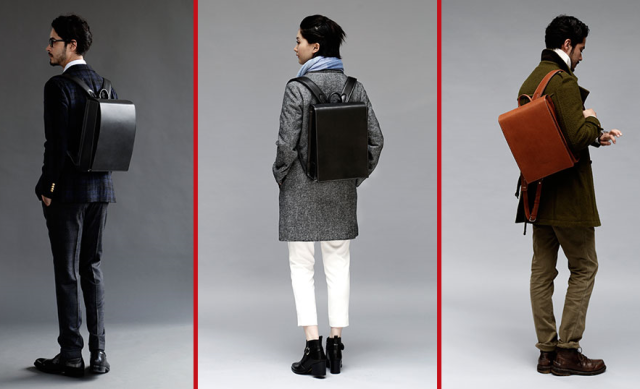
Last month, we took a look at how in Japan many children are expected to commute to school without their parents’ help starting in elementary school. That’s not the only amazing display of responsibility that’s part of everyday life for Japanese kids, though.
Not only do Japanese schools not have school busses, they also don’t have food-serving or cleaning staff. That means it’s the students themselves who’re responsible for distributing school lunches and keeping the building clean, and the diligence with which they go about their tasks would put many full-blown adults to shame, as shown in this video of all the things Japanese grade schoolers are expected to do during a typical school day in addition to studying.
Hayao Miyazaki and Mamoru Oshii are two of the most successful and influential anime directors in the history of the medium, but their films couldn’t be more different in tone and appearance. The soft-edged natural environments of Miyazaki’s anime are bathed in a nostalgic glow, while Oshii’s animation, such as Ghost in the Shell and The Sky Crawlers, is filled with shadowy ruinscapes and turns its sharpest focus inwards to the human mind and consciousness.
Miyazaki and Oshii are such fundamentally different people that they even communicate with their production teams in completely opposite styles. But that’s not to say that one can’t find things to admire in the works of the other, as Oshii has shared his favorite film and even scene in a Miyazaki anime.
If you hail from one of the many developed nations that comprehensively frowns on the practice of whaling, you may have the image that an appalling number of people in Japan eat whale meat. And while that may be true in relative terms compared to extremely low number of people who regularly eat whale meat in several parts of North America and Europe, whaling can be a divisive topic even within Japan. Some Japanese have no problem with dining on whale from time to time, treating it like just a meatier, gamier fish. Others think eating whale is a custom that’s long past its time and needs to be rethought.
To get a preliminary understanding of some of the many different opinions on the issue that exist in the country, we interviewed a number of Japanese people and asked them whether they were in favor of or opposed to whaling and eating whale meat.
There’s nothing that says a good-looking woman can’t be a successful politician or accomplished shogi player. However, there’s no reason to expect a greater-than-average ratio of beauties in those walks of life either, so when a particularly pretty individual makes an appearance, she tends to get a lot of attention.

On the other hand, it seems like there should be a lot of overlap between the demographics of “professional athlete” and “attractive person.” Being among the best at the sport you play requires plenty of practice, and all that exercise generally results in a toned body and bright aura of healthy vitality. Still, it’s not like there’s any concrete corollary between athletic prowess and practically perfectly balanced facial features or luxuriously flowing, seemingly never out-of-place hair. That’s why this recent addition to a Japanese professional team is being called “the most beautiful volleyball player in the world.”
You might think that Japanese advertisements are all Hollywood celebrity endorsements or surreal tales of busty schoolgirls with nose rings, but when it wants to, Japan can make commercials that yank on the heartstrings as strongly as anywhere else in Asia. Getting the waterworks flowing today is Toyota, asking the question, “Do you care about your parents as much as they love you?”, and while the video is short on cars, it makes up for that with plenty of tears.
Even in the modern era, you’ll find plenty of occasions in Japan to dress up in kimono, such as for festivals, fireworks exhibitions, or other special events (and considering how relatively easy it is to do, it’s something you really should try at least once). But as much as Japan may love its traditions and history, there aren’t too many occasions when you get to strap on a set of samurai armor, so when life gives you the opportunity to do so, like at this new photo studio in Tokyo, you won’t want to let it pass you by.
Nintendo has a squeaky clean image. Its titles are family-friendly, and no other company does more to make quality video games accessible and enjoyable to inexperienced or casual players. The company managed to create a hit team-based shooter that’s completely devoid of the sort of violence that’s so commonly a selling point for the genre, and even its two most committed rivals, Mario and Bowser, regularly take time out from fighting to play golf or tennis together.
So you might expect Nintendo to have nothing but friendly affection for anyone and everyone, but its official Line account shows that rival Sony’s PlayStation is strictly excluded from the circle of good vibes.
Compared to some of the cooler or more elegant-sounding parts of Tokyo, like Jiyugaoka (“Freedom Hill”) or Akihabara (“Field of Autumn Leaves”), the Shinagawa neighborhood has a pretty dull name, meaning essentially “Merchandise River.” Still, you have to admit it’s appropriate. Located near the mouth of the Sumidagawa river, for generations Shinagawa has seen plenty of cargo ships sail past as they ferry goods in and out of Tokyo’s ports.
The name even works in a figurative economic sense, as Shinagawa Station is a major rail hub that thousands of workers pass through every day on their way from their homes in the suburbs to their offices downtown. The facility is designed to keep passengers efficiently flowing in and out, but this morning the “river” got blocked due to a problem with the trains, resulting in perhaps the most crowded scene of rush hour in Japan that we’ve ever seen.
Tokyo’s Harajuku neighborhood means different things to different people. The beautiful people living the Japanese high life are drawn by the brand-name jewelers on the tree-lined Omotesando boulevard. Teens, meanwhile, flock to the narrow Takeshitadori shopping street to score up-to-date fashions that leave their parents scratching their heads in bewilderment.
And for those with a sweet tooth, Harajuku is all about the crepes.
Our intrepid Japanese-language correspondent P.K. recently took a break from seeing how many slices of roast pork or boiled eggs he could cram in his stomach and instead decided to see how much dessert he could consume in a single serving, as he decided to max out a Tokyo crepe by ordering one with every available dessert topping.
Everyone could use a little extra money in their pocket as we head towards the end of the year. Maybe you’ve got a long Christmas shopping list, made fancy New Year’s Eve plans, or just want to take a trip back home to visit family and friends during winter vacation.

As such, you might find yourself looking for a part-time job to help fill your coffers, and while you could go with such traditional choices as picking up a shift working in a restaurant or a shop at the mall, your options now also include a micro-stint as an editor for two of Japan’s most popular manga anthologies.
Japan’s urban landscape is dotted with giant TV monitors mounted on the sides of skyscrapers. Despite what you might expect, though, from watching science fiction anime or young adult-literature-sourced movies depicting dystopian futures, they aren’t constantly broadcasting information about where citizens should evacuate to during the current alien invasion or directives from the Office of the Supreme Leader.
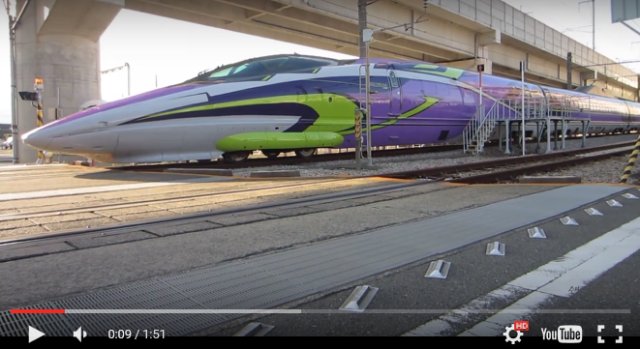
No, usually they’re just devoted to ad loops. But this weekend, public big screens across Japan will be showing something a little more exciting: The entire first episode of anime hit Evangelion.

Even if you’re not ordinarily a very artistic person, we bet you get a spark of inspiration when you’ve got a pancake on your plate. Who hasn’t drawn a doodle or sketched a smiley face in maple syrup, or at least initialed their flapjacks with the sticky, tasty condiment?

After all, tasty as they may be, pancakes look pretty dull if you don’t add any decoration…unless you’re dining at this restaurant in Japan where the pancakes come pre-decorated with images of Pikachu, Mario, and dozens of other anime and video game characters.
Somewhere along the way, people started calling Nissan’s GT-R, the company’s flagship sports car, “Godzilla.” It’s a fitting nickname, since the GT-R is intimidatingly powerful, and also because with a curb weight of 1,740 kilograms (3,836 pounds), it’s not exactly svelte.
Still, one American turning shop thinks there’s an even more apt comparison to be made that to the King of the Monsters, and has created a customized GT-R with its appearance based on the Imperial Japanese military’s World War II Zero fighter plane.
Imagine you’re out and about, strolling around town, when suddenly you come upon one of your fellow citizens sprawled out on the sidewalk. Granted, the fact that it’s not a human, but a cat, would make the situation a little less alarming, but still, you’d be worried right?
That’s how one Japanese Twitter user felt, but it turned out the kitty wasn’t just OK, but adorable too.
While visual arts and linguistics are both creative fields, skill with one isn’t necessarily a prerequisite for the other. After all, as long as you can look at three hues and pick the one best suited for the picture you’re painting, it doesn’t really matter if you know whether to call it fuchsia or periwinkle.
As a matter of fact, some would argue that coupling names and colors limits the imaginations of budding young artists, which is why these two Japanese designers have produced a set of paints for children that have no names on their labels, only splotches of their base component colors.
Seeing as how the entire English-language RocketNews24 team is composed of people who at some point moved to Japan, we’re pretty big proponents of living here. One unpleasant part of the package, though, it that since you can’t claim the whole country as your residence, living in Japan means finding an apartment in Japan, which is generally agreed upon as one of the least enjoyable parts of the expat experience.
Why? For the following four reasons.