Everyone knows that in case of an emergency, inflatable slides pop out from the exits of an airplane, enabling passengers to quickly and safely exit from the craft. But what about trains? Sure, walking on and off the platform is easy, but what if the train makes an abrupt stop and you’re staring at a four-foot drop to the ground? If you find yourself in Japan, you’ll be able to use the very seat you’re sitting on to make a swift escape.
Japan (Page 1626)
As we’ve previously mentioned, it’s Obon this week in Japan, and that means festivals, dancing, and ancestral spirits galore! Far from being the terrifying ghosts that you might find lurking in your closest in a horror film like Juon, however, these are spirits that Japanese people are happy to welcome into their houses. In addition to ohakamairi, or visiting graves, Japanese people also offer symbolic sacrifices at their home alters.


Some of the more interesting traditional sacrificial items are the cucumber horses (kyuri uma) and eggplant cows (nasu ushi) meant to carry the ancestors’ spirits to and from our earthly realm, but here’s one designer’s awesome, modern take on this ancient custom!
Foreigners visiting Japan for the first time might be taken aback by how widespread the use of umbrellas is. Sure, during rain storms umbrellas make sense, but even during pleasantly sunny days you’re likely to see enough women putting up parasols to make you think the Bauhaus were in town.

Even this is understandable as “the Land of the Rising Sun” is not just another pretty name. In the middle of summer the often cloudless skies leave us at the mercy of the sun’s unrelenting rays. Combined with a lack of trees in many urban areas there’s simply no escape. And with pale skin traditionally considered to be a sign of beauty and elegance, it’s no wonder so many women still carry a parasol, but it would seem that the heat is getting so bad these days that men, too, are bit by bit turning to a once exclusively feminine accessory for relief and protection.
The ancient Japanese capital of Kyoto is undoubtedly one of the most popular tourist destinations in Japan for foreign and Japanese travelers alike, and with good reason — there’s a whole lot to see, feel and eat in this beautiful, historic city. Yes, Kyoto is a city that definitely provides a feast for the senses. I was fortunate enough to have the chance to visit the city recently, and while you’re sure to find an abundance of tourist information on Kyoto from numerous sources in a multitude of languages, I thought I’d share some interesting aspects of the city I experienced during my trip that may not necessarily be part of a typical visit to Kyoto. Here’s the first article in our three-part series on some new and original ways to enjoy this picturesque city that is full of magnificent temples, gardens, works of art and, of course, exquisite foods.
But first things first. Once you have your plane and train tickets to Kyoto booked, you’ll need to think about where you will be staying. Now, I’m sure there are plenty of accommodation options in Kyoto, but if you’re tired of staying in a regular hotel, why not try staying in a restored old machiya house that combines history and function?
Observed by those who don’t play them, video games may all seem a little bit peculiar. Mushroom-eating plumbers stomping hammer-throwing turtles, ultra-violent military shooters whose protagonists bound across battlefields shouldering rocket launchers while hurling grenades and taking bullet after bullet to the chest, and of course the hordes of zombie titles that, like their lumbering stars, simply won’t die. For those accustomed to the rules of these digital worlds, though, this all makes perfect sense.
There are occasionally, however, a few titles that even the gaming elite would recoil from wearing an expression somewhere between “ermahgerd” and “turd sandwich”, and YouTube-based ZoominGames believes they’ve identified the cream of said crop. So let’s take a look at the channel’s “Top 5 Weird Games” one by one and see if they’re really they freaky affairs they’re made out to be. Oh, and did we mention that all five happen to have been made in Japan…?
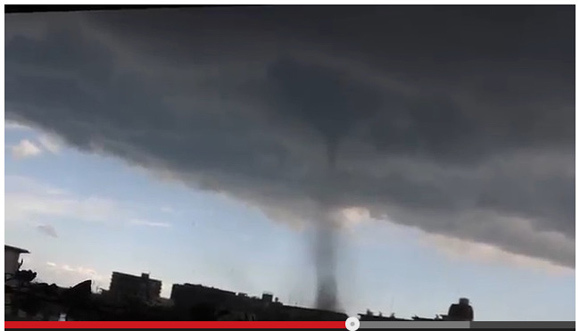
Much like sweat-stained shirts or the incessant cry of cicadas, lightning storms are just a part of summer in Japan. But with all of those electrostatic discharges, something other than the ground is bound to be hit.
On August 12, one man in Tokyo not only saw a train being struck by lightning, he caught the frightening scene on film.
Ginti Kobayashi is a writer who in recent years can be seen in the series, Kaidan Shinmimibukuro Nagurikomi! In these DVDs, we follow Kobayashi and his colleagues as they explore Japan’s most notoriously haunted places.
In the spirit of summer, when Japan likes to cool down by sharing chilling stories, Kobayashi sat down with Spa magazine and laid out his choices for the top 10 most frightening haunted places he has ever experienced.
This Thursday, 15 August marks the beginning of Obon in most of Japan. Obon is a Buddhist custom in Japan where families gather together and are visited by the spirits of their ancestors. Various festivals are held to welcome the ghosts with music and dancing, depending on the region.
However, one tradition that is fairly consistent across the country is known as Ohakamairi (visiting the grave). This custom involves the family going to their grave to clean it and give presents to their deceased ancestors.
Okay, so there isn’t an official event called “The Running of the Nerds” in Japan, or anywhere else in the world for that matter, but what else would you call this biannual spectacle of Japanese otaku frantically clamoring off a crowded train, sprinting up the platform stairs, rocketing past the turnstiles, and…patiently waiting in line for five hours? Read More
New fad in Japan: Posting your phone number, bank account, and other personal information on Twitter
Even as more and more people complain about how unsocial social network services have become, some Japanese Twitter users have put their faith in humanity and opened up a new line of communication with their fellow Tweeters.
How? By publicly posting their phone numbers, some going as far as posting their bank account information and address.
A few weeks ago, we introduced you to some of Japan’s greatest themed-hotel rooms, but it seems we may have jumped the gun just a bit because The Prince Hotel located in Minato Ward of Tokyo has just opened up a brand new Hello Kitty-themed suite, and it might very well be one of the cutest rooms we’ve ever seen.
Check out the photos and details of the cutest room in Japan below.
Nagoya District Court ruled on August 9 that the family of a man with dementia who entered a railway line and consequently died after being hit by a train must pay compensation to the Japan Railway (JR) Group. The court concluded that the measures the family put in place to prevent the 91-year-old from wandering off by himself were insufficient.
The traditional onsen tamago, not widely consumed outside of Japan, follows a simple recipe of blasting an egg in its shell with hot steam or letting it slow-cook in hot water. It’s basically a poached egg that’s shelled after the poaching.
Seeing as perfectly poaching an egg the traditional western way is a messy and surprisingly complicated affair, it makes a lot of sense to just leave the eggs in their shells and stick them in some hot water for a while, or better yet, just leave them in a hot car, forget about them entirely, and go play some XBox. Next time you go on a beer run, you’ll find delicious onsen tamago waiting for you on your dashboard, like this Japanese Twitter user.
MOS Burger, the Japanese fast food chain famous for being a fresher, slightly healthier alternative to other hamburger joints, has recently announced that it will release a new hamburger sandwich to go alongside its existing range of plain and cheese “Tobikiri” hamburgers. The exciting twist? This one’s loaded with French demi-glace sauce and aligot, a sumptuous mix of potato and cheese that’s sure to send you to premium burger heaven.
Fans of anime and manga are most certainly acquainted with the ever-popular adventure series, One Piece. Now, the brand that brings us all of our favorite pirate-themed products is teaming up with the water label, FRECIOUS, to deliver some totally cool One Piece water dispensers.
Don’t worry, though the story of One Piece takes place on the ocean, these water coolers deliver only the freshest grade-A water from the forests of Mount Fuji. Read More
With character design and a visual style worthy of a Disney production, when we were introduced to this short animation by the staff at our sister site RocketNews24 Japan, we almost didn’t believe them when they said it was made not by a world-famous animation studio but by students of the National Taiwan University of Arts. Half an hour of replays later, we managed to tear ourselves away from the video just long enough to share it with you, our dear readers, too!
It’s cute, it’s emotive, and it’s absolutely gorgeous; this is Deathigner.
Ishigaki Island has a few well known specialty foods such as Ishigaki beef and Yaeyama soba noodle, but aside from these delicacies a little-known snack food has been making waves across the nation. They call it onisasa.
Onisasa should be mistaken for some gimmicky new flavor the city of Ishigaki has concocted just to drum up tourism. This little hidden gem had been around for a long time in the region before getting the attention of greater Japan. So just what is onisasa?
It feels like yesterday when our reporter Kuzo travelled deep into China for find the fabled “melt-proof ice pop” named Banana – a vanilla ice cream encased in a protective gummy sheath. However, this year Banana has come to the world (under a variety of names such as Bennana in Japan), and this October it will reach the shores of Japan.
To celebrate, Banana’s maker Nestle held a “Banana Day” event in Harajuku, Tokyo on 7 August. Yet another punny Japanese holiday on a Japanese reading of “8/7”, it involved the giving away of free monkey ears, T-shirts, and of course Bennanas.
It’s summer in Japan and that means everyone is on the lookout for ways to cool down and cope with the stifling heat. For many Japanese, relief comes in popsicle form, and one of the most popular and refreshing is the Suika Bar, literally “watermelon bar”, which featured in our recent Japanese convenience store ice-cream ranking.
But what happens when you have a craving for the crunchy watermelon treat and the blistering walk to the shops is too much to bear? Our Japanese reporter recently faced this dilemma and tried to recreate the popsicle with just the fruit instead. How will the humble frozen watermelon measure up next to its manufactured cousin? We bring you the answer to this summer’s most pressing question after the break.