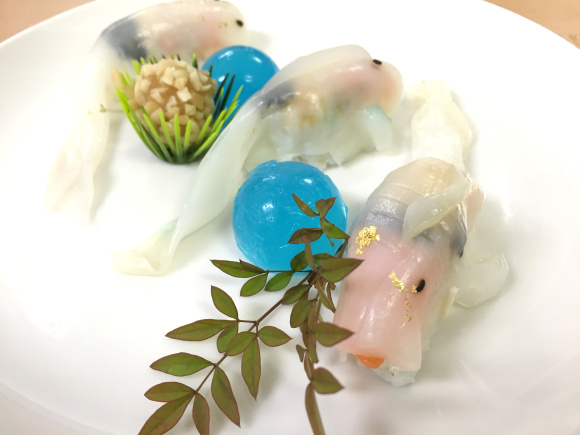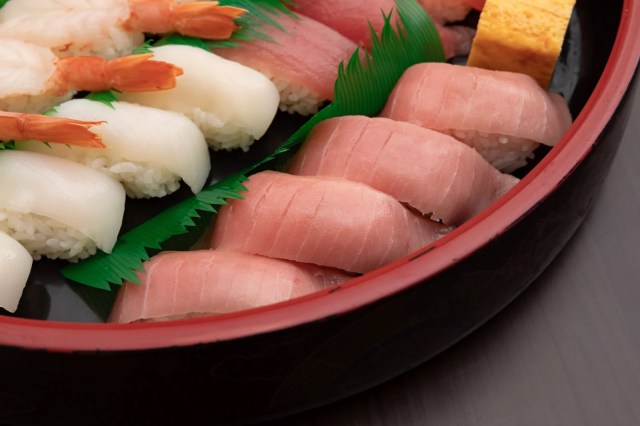
Last week we saw the amazing koi-shaped (carp-shaped) sushi created by one sushi shop in Japan. While they were certainly beautiful and life-like, one question was on our mind: How do they taste?
To find out, we ordered a box of the koi-shaped sushi and gave it a try. Does the fish-shaped sushi’s taste live up to its appearance? Read on to find out!
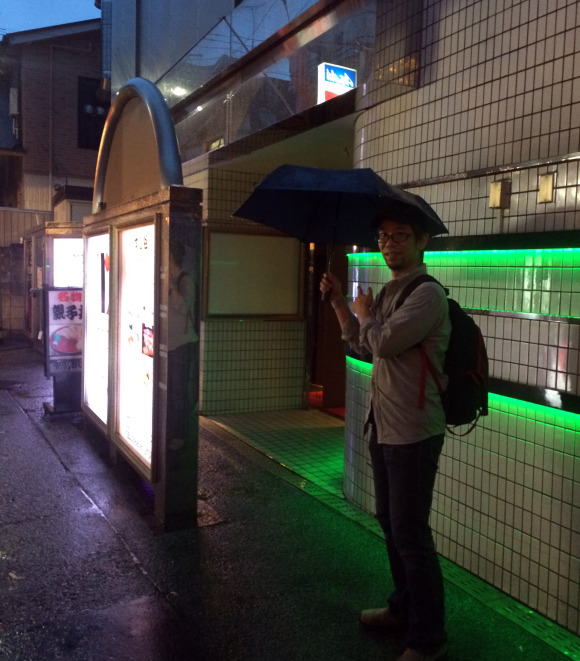
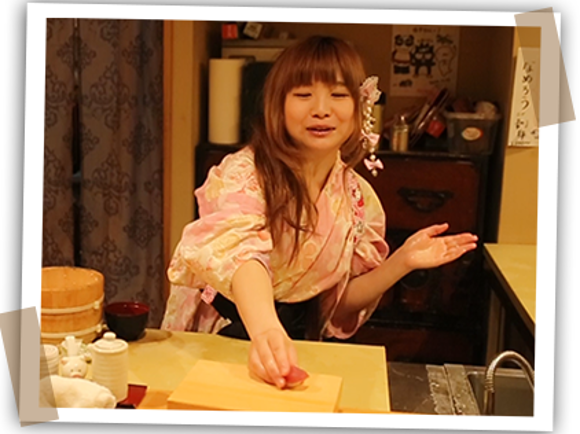
How many times has a woman made sushi for you at a sushi bar in Japan? If you answered ‘never’, you’re certainly not alone as the world of sushi is one that’s traditionally been dominated by men. While a number of female sushi chefs are working hard to change societal norms and stereotypes, there’s one special restaurant in Akihabara that’s taking things even further, with a sushi bar staffed entirely by women. From purchasing ingredients to preparing fish and making sushi, these ladies are looking to challenge the male-dominated profession, and they’re doing it all while dressed in traditional Japanese clothing.
So what’s the quintessential visual representation of fish in Japanese culture? Is it a decorative koi, swimming gracefully in a garden pond? Or is it a delectable piece of sushi sitting atop an elegant piece of tableware?
Maybe it’s both, like these koi-shaped sushi morsels that combine five staples of the popular dish into a beautiful piece of edible art.
As a nearly 10-year resident of Japan, whenever I’m back to visit the States I love taking friends and acquaintances out to a nearby sushi bar and being easily the most knowledgeable sushi snob in the whole place. While my buddies are pouring over the weird fusion sushi – inevitably featuring fried shrimp sticking out at crazy angles like that spider-head monster in The Thing – I’m busy cramming the more delicately-flavored and exotic nigiri cuts into my gullet, rolling my eyes around in the back of my head and making exaggerated, mmmm, ohhh man, noises and sometimes giving the side-eye to the guy reluctantly prodding his uni nigiri like it’s going to come to life and slither off the table.
I’ve developed a taste for Japanese style-sushi, in other words, and I’m not afraid to be a jerk about it. But, back here in Japan, I’ll be damned if I don’t sometimes get intense cravings for a good ol’ California roll. Luckily, there’s a great place serving authentic American California rolls and other “Americanized” sushi in Okinawa, just a (relatively) short hop from Tokyo, and you can bet we went to try it out!
Kaitenzushi restaurants have come a long way. In the beginning, their system of having diners grab their own plates of sushi from a revolving conveyor belt was seen as a quirky technological novelty, or by more severe critics as a sub-par tarnishing of the proper sushi-eating experience.
Since then, though, kaitenzushi has become one of the most broadly beloved sectors of the Japanese restaurant industry, having grown so popular that certain operators are experimenting with unique new kaitenzushi niches. Now, one company is planning to take its revolving sushi restaurants into a bold new direction by revamping them so that the sushi doesn’t revolve.
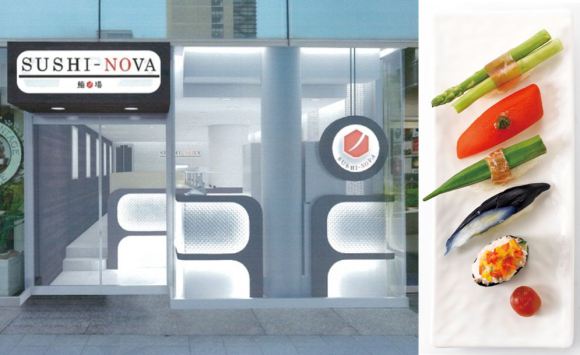
If you’re vegetarian or simply not a fan of raw fish, a visit to a sushi train restaurant with friends isn’t exactly going to fill you with joy. While the touch panel screens and the treat of watching your orders arrive on a conveyor belt is always entertaining, wouldn’t it be nicer if there were a few more fish-phobic options on the menu?
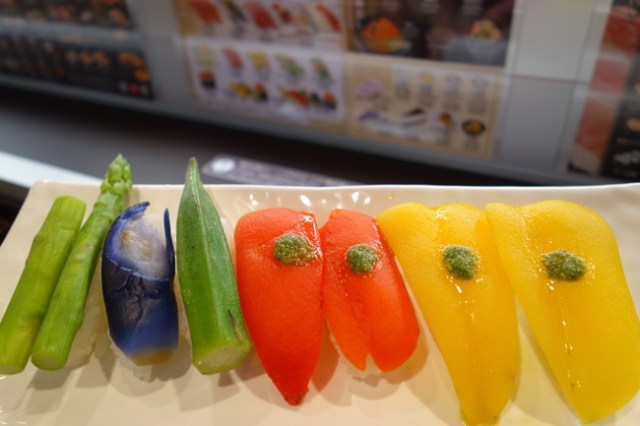
That’s exactly what a new chain of restaurants in Japan is offering, with vegetarian sushi, made with fresh, seasonal vegetables, and a host of other meat-based dishes, including ham and pork-topped sushi options, available for customers.
We paid a visit to Sushi Nova at their brand new location, the first of a hundred to hit Japan by 2019, and were incredibly impressed with what they had to offer.
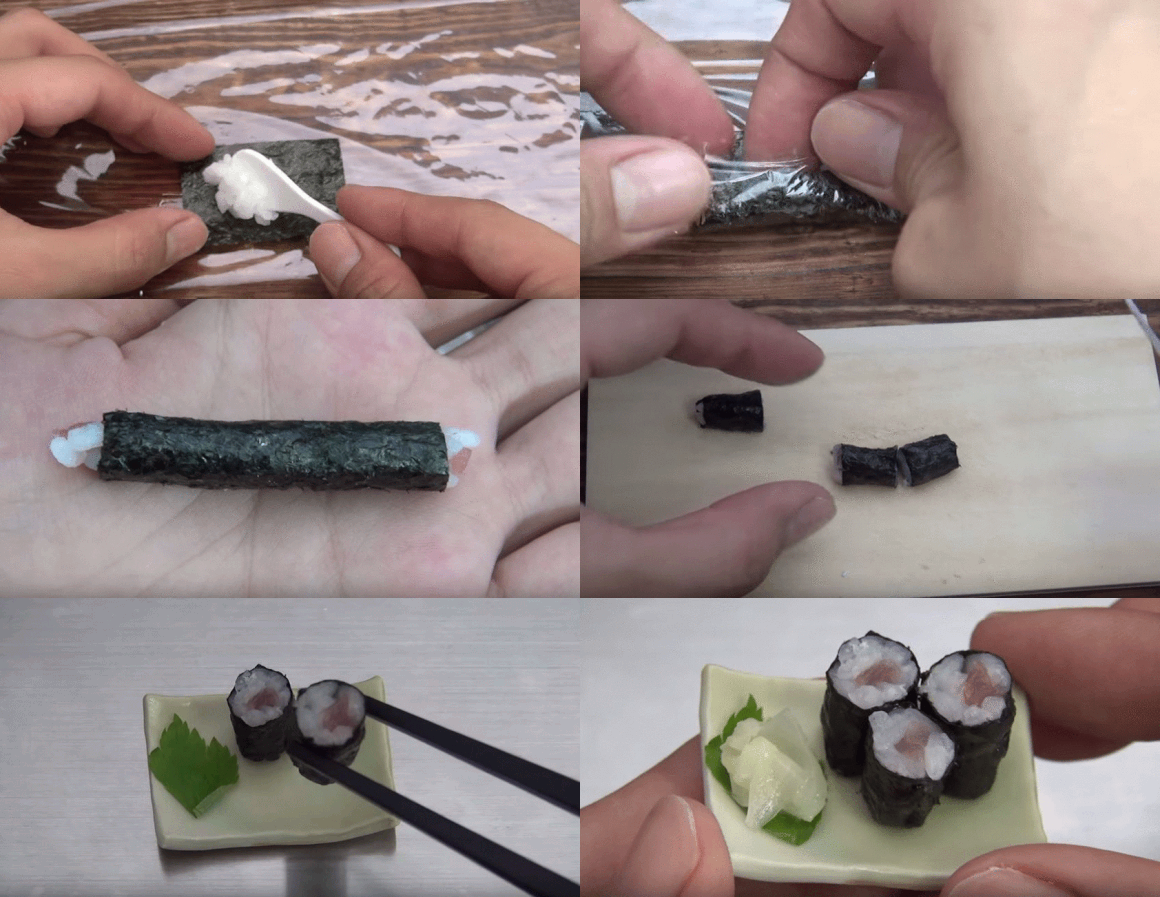
The miniature toy market is huge in Japan. From tiny Hello Kitty baked goods to pint-sized supermarket items and even scaled-down Japanese-style rooms filled with traditional furnishings, you don’t have to be a child with a doll-house to delve into the world of miniature here in Japan.
Adults have become so transfixed with all the adorable items on the market that there are a number of YouTube channels purely dedicated to the art of petite cooking, using everything from tiny utensils to working miniature ovens.
One of the latest videos to appear takes us through the sushi-making process, transporting us to a tiny world that viewers say is so calming it can cure all types of stress and anxiety. Watching this short clip will be the best few minutes of your day!
Popular conveyor belt sushi chain Kappa Sushi (pronounced Kappa Zushi) is known around Japan for its tasty morsels, starting at 108 yen (US$0.90) per plate, and its family-friendly setting, with cosy booths and a cute logo featuring an animated kappa, or water sprite (think Sandy from the TV series Monkey Magic, only tinier, rounder and a thousand times cuter).
Now the well-known chain is moving things up a notch, with the September 18 opening of a new type of conveyor belt restaurant called Sushi Nova. Featuring fashionable, modern interiors and a salad sushi menu that uses seasonal vegetables in place of fish, the company plans to open 100 of these new restaurants in Japan by 2019.
Believe it or not, sushi has been available in the US since the 1960s. In fact, the first American sushi restaurant opened in 1966 in Los Angeles. But while sushi is booming now, it took some time to really take off in the States and still isn’t necessarily a family-friendly dining option, with many kids (and adults) not so keen on eating the raw fish delicacy.
REACT, a light-hearted YouTube channel featuring kids, teens, and older adults reacting to a variety of things, recently released Kids vs. Food – SUSHI, a video showing a few American kids trying some popular nigiri sushi and some of these Japanese favorites didn’t all sit well with the kiddos.
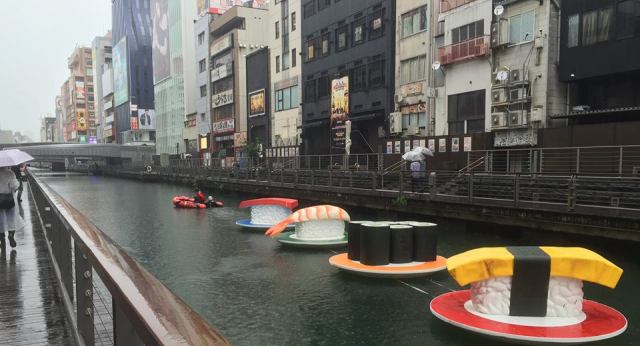
Osaka is known throughout Japan for being a foodie’s paradise. The area has such a focus on food and dining and has given birth to so many well-known dishes that there’s even a famous saying: Kyo no kidaore, Osaka no kuidaore, meaning “Dress up till you drop in Kyoto, eat till you drop in Osaka”.
This October, the city will be showing us just how much their food culture means to them, with a giant floating sushi traincarrying plates of gigantic sushi up and down the river, and we’re taking a sneak peek at video and photos of the trial run!
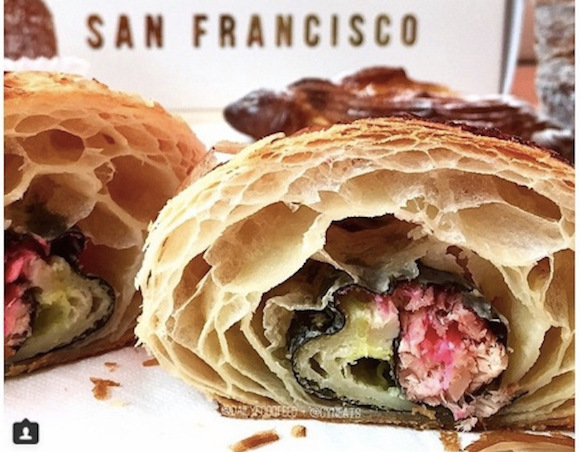
Sushi … yum! Croissants … flaky, buttery goodness! Sure, we love them both, but while hybrid foods like the cronut seem to be increasingly common these days, does it mean the two foods would taste good combined together?
Well, unexpected as the combination may sound, there actually exists such a product, and what’s more, enough people who have tried it seem to enjoy it. Ladies and gentlemen, we present to you the “California Croissant“, a sushi roll inside a croissant, which some people are eating with chopsticks and soy sauce!
Tuna is a powerhouse of a fish which swims all over the world’s waters, and the Indian Ocean is no exception. Countless fishing boats settle at major ports such as the one in Mombasa, Kenya, providing a breeding ground for commerce, cultural exchange, and of course fresh fish.
Our reporter Go Hatori, after getting voluntarily beaten by Maasai warriors, postulated that with Mombasa’s capacity to get fresh fish, there may very well be some great sushi in Kenya as well. Go didn’t really put any research into this, but what adventure starts with careful thought and census taking?
So he hit the streets of Nairobi and started asking people “Do you know any sushi restaurants around here?” Thinking he may have found a hidden oasis of sushi tucked away on the African continent, Go was able to compile a list of three Kenyan restaurants for his sushi safari.
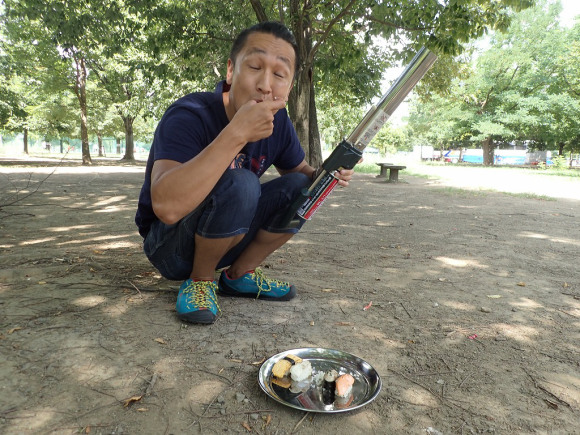
Okay class, who’s ever tried aburi sushi, or seared sushi before? Sushi prepared in this manner has its own unique savoriness that’s different from that of the raw kind.
Our Japanese reporters recently got it in their heads that they wanted to try preparing some roasted sushi for themselves…and when they do something, they go all out. In other words, forget regular kitchen tools–a flamethrower was obviously called for in this situation! Would they find that bigger flames equal bigger flavor?
I’m writing this open letter to first welcome you back to Japan, but also to warn you of a great danger that lies ahead.
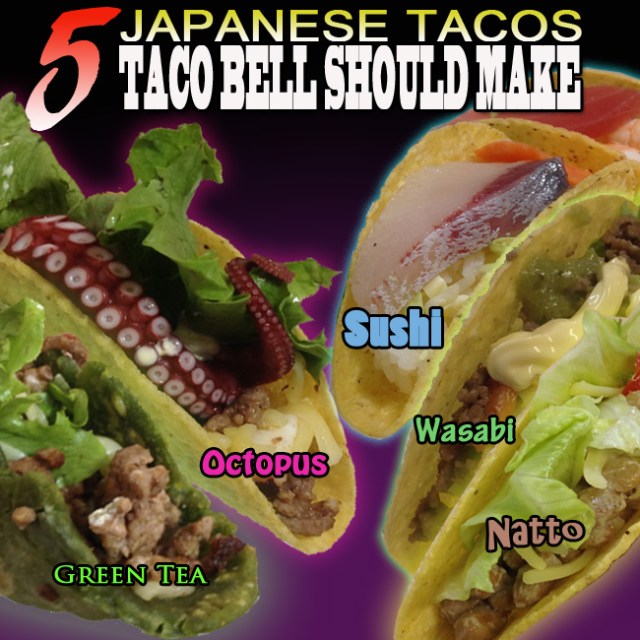
When you first announced you would open in Shibuya I was among those who felt that warm feeling of an old friend returning. And even though there were a few hiccups with your grand opening such as the lack of beans and “supreme court tacos” on your online menu, I had faith Taco Bell would rise to greatness in Japan.
However, since then we haven’t really heard much from your restaurant, and that worries me. So, I’d like to present you with five ideas for uniquely Japanese tacos that will not only appeal to the local crowd, but be eye-catching enough to make your brand a name to remember. I even went ahead and actually made and taste-tested them for you!
Japanese food is becoming more and more common outside of Japan. In fact, many people enjoy it because of the use of fresh fish and lots of vegetables. Those who get the craving have also discovered that it’s pretty easy to find a Japanese restaurant in their town, but there are still some people who find the idea of raw fish and sushi intimidating. There is so much information out there for the sushi novice that even figuring out where to begin can be daunting. Just as we brought you the handy “counting in Japanese” infographic, we have found a useful guide that assembles all the sushi basics in a really easy to understand fashion. Sit back and get ready to scroll through Sushi 101.
Sushi has become well known and loved the world over. Granted, a lot of what you’ll find in your home country is altered from “traditional” sushi to cater to local tastes (and would have ol’ Jiro shaking his fist), but what food doesn’t go through a bit of change when it crosses borders?
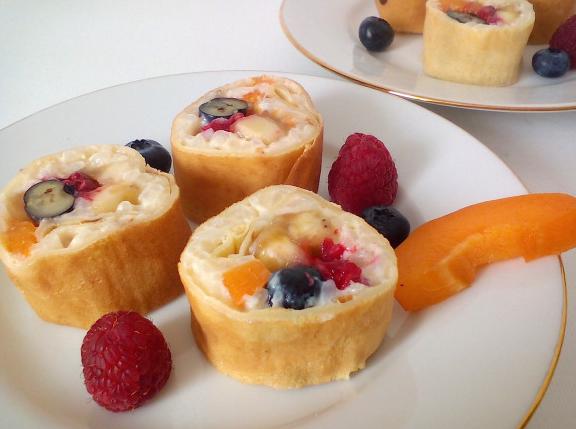
The only thing this dessert sushi has in common with its namesake is that it contains rice. But that doesn’t change the fact that it looks absolutely delicious and that you should get in your kitchen and go try making it right now!
Around the internet there is a Japanese term, majikichi, which is short for “Maji de kichigai jimiteru kara yamero” or “Stop because you seriously seem to be losing your mind”. Needless to say it’s a convenient word.
Perhaps a good example of majikichi is in the sushi world. With all of Japan’s less traditional sushi restaurants known as “sushi trains” competing for people’s attention, they often come out with some eye-catching toppings, and sometimes things go too far.
In the true spirit of journalism, our reporter Nakano has been out and about finding the most majikichi sushi in the land from bacon sushi to rice omelet sushi. Now his travels bring him to Japan’s first ever sushi train chain Genki Sushi and their latest offering: Blueberry Cream Sushi.
If you’re looking to try a popular type of washoku, or traditional Japanese food, while in Japan, sushi would be at the top of the list for many. If you wanted to try some authentic yoshoku, or Western-style Japanese cuisine, omurice, a parcel of rice wrapped in an omelette skin and topped with tomato sauce, would be one of the firm recommendations.
Now both of these star players have finally come together as part of a brand new menu from popular revolving sushi chain Sushiro. This unique Omurice Sushi is dainty, delicious and it retails for only 108 yen!
In Yoyogi, Tokyo, there stands an unnamed sushi shop which sells impressively crafted sushi at rock-bottom prices. It’s a fairly new restaurant, known to locals as “The Sushi Shop With No Name” or “That Sushi Shop That Still Doesn’t Have A Name.”
To us, it became known as “The Place That Serves Yellowtail Sushi For Only 10 Yen (US$0.08) A Piece!” Granted, that’s not the catchiest of names, especially with the conversion to US dollars, but it’s definitely enticing.
And so, our resident sushi expert Mr. Sato set out to find this shop with no name and see if their quality also makes this a place worth visiting.
If you’re thinking that one “would have to be out of their ever-lovin’ mind to mix sushi and soft serve ice cream,” then you’re not alone; that’s exactly what our reporter Nakano thought when he spotted an item called “Soft Susheam” on the menu of an Iwasaka sushi train restaurant in Okayama City. And yet, like a moth to a flame, he found himself unable to resist its lure.
Could something which sounded like a cross between soft-serve ice cream and sushi – two foods which, when served alone, have always been true crowd-pleasers – really work? Nakano simply had to find out.